

Where to look, when to go, and why Amelia Island is one of the best beaches to find shark teeth on Florida’s East Coast
Best Beaches to Find Shark Teeth in Amelia Island & Much More
Shark tooth hunting isn’t a gimmick or a one-off lucky find. Amelia Island sits on layers of ancient seabed, and the beaches are constantly refreshed by tides, storms, and dredging. The result is a steady supply of fossil shark teeth—some millions of years old—turning up right where the waves meet the sand.
The best part? You don’t need special gear or a geology background. You just need to know where to walk, when to show up, and what you’re actually looking at once you find something.
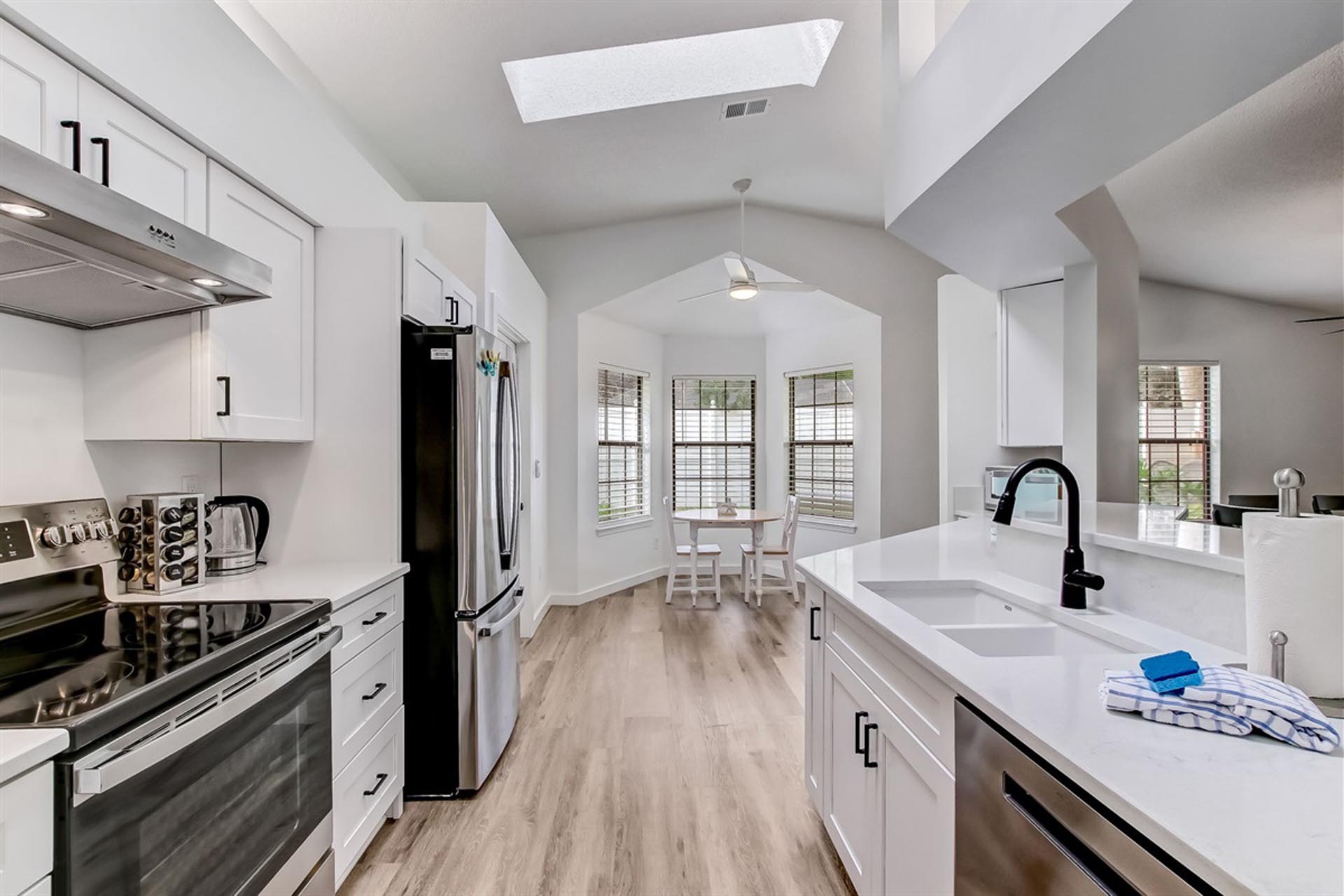
At Stay Better Vacations, we offer a handpicked collection of vacation rentals across Amelia Island and the charming town of St. Marys, Georgia. From relaxed beachfront stays to homes close to history and local flavor, plus plenty of pet-friendly options, it’s easy to find a place that fits the way you want to travel.
In this blog post, I’ll walk you through the best ways to go shark tooth hunting on Amelia Island.
Ready to uncover a few ancient treasures?
TL;DR
- Why Amelia Island Is So Good for Shark Teeth
- Where to Look First (and Why It Matters)
- When to Go: Timing Beats Effort
- How to Hunt Without Making It Complicated
- What You’re Likely to Find
- Rules, Permits, and Good Beach Etiquette
- Guided Hunts and Local Expertise
- Local Shark Tooth Hunting Tips (What People Actually Do)
- FAQ: Shark Tooth Hunting on Amelia Island
Why Amelia Island Is So Good for Shark Teeth
Fast forward to today, and two things keep bringing those fossils back into view:
- Simple biology: Sharks lose tens of thousands of teeth over a lifetime.
- Geography: The nearby St. Marys River is regularly dredged to keep shipping channels open.
Where to Look First (and Why It Matters)
Across the inlet in Georgia, Cumberland Island National Seashore offers a slightly different experience. Teeth turn up on the beaches, but they’re often easier to spot along the island’s sandy interior roads, which are graded with dredged material. It’s less polished, more wild, and makes for a memorable day trip if you’re already in the area.
Key Takeaways
- Fort Clinch is the most consistent place to find shark teeth.
- Low tide and fresh tides matter more than distance walked.
- Shell lines beat open sand every time.
- Recently renourished beaches can surprise you.
- Most finds are small—slow down and scan carefully.
- No gear needed; timing and attention do the work.
When to Go: Timing Beats Effort
Seasonally, winter and spring tend to be calmer and less crowded. Fewer people scanning the sand means fewer eyes competing with yours.
Key Takeaways
- Timing beats distance—show up at the right tide.
- Low tide, especially 2–4 hours after high tide, is prime.
- Storms reshuffle the sand and boost your odds.
- Winter and spring mean quieter beaches and better finds.
How to Hunt Without Making It Complicated
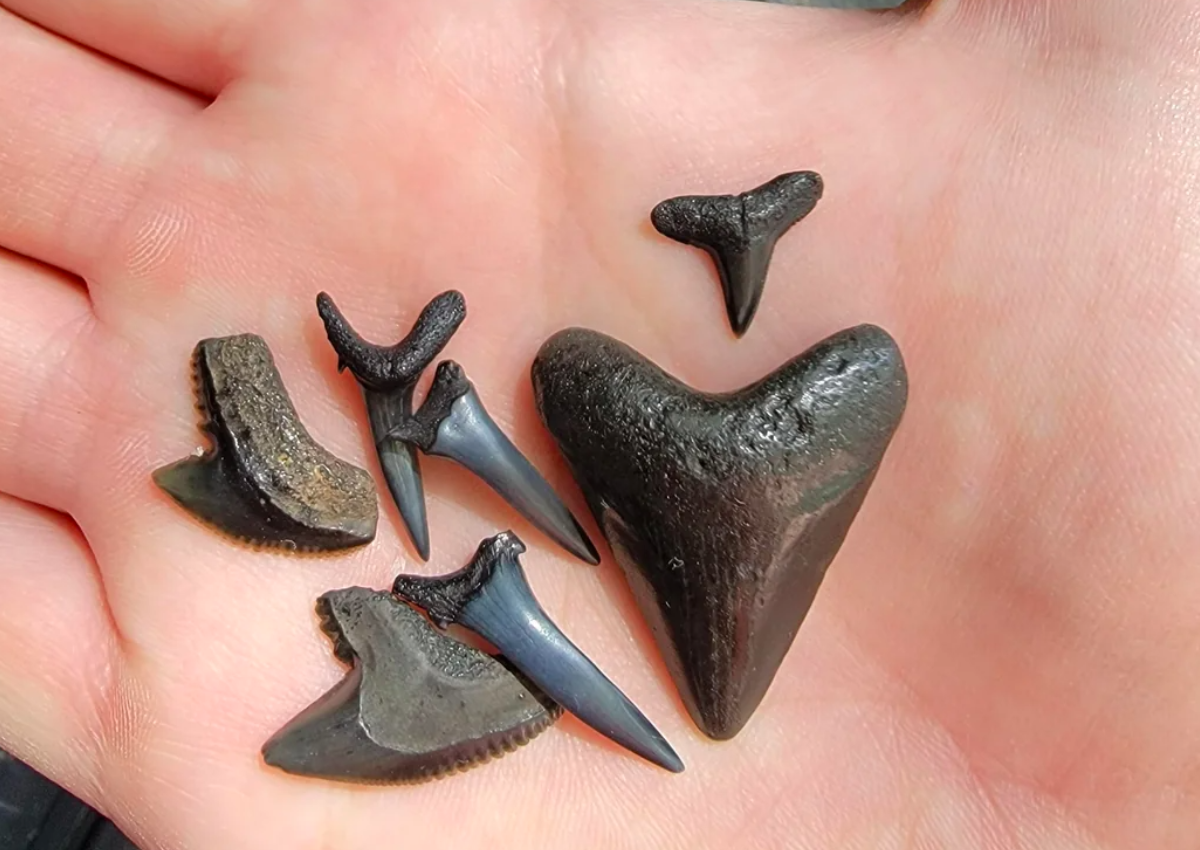
Most finds on Amelia Island happen right on the surface. Walk slowly near the water’s edge and look for dark shapes mixed in with shells and pebbles. Fossil teeth are usually black, dark gray, or deep brown, which makes them stand out once your eye adjusts.
Shell beds are key. Anywhere shells and small stones gather, teeth tend to gather too. You can bring a small scoop or sifter if you like, but plenty of people do just fine with nothing more than patience and comfortable shoes.
What You’re Likely to Find
Rules, Permits, and Good Beach Etiquette
Shark tooth collecting is allowed in Florida without a permit. That’s important. If you move beyond teeth into vertebrate fossils, a Florida Fossil Permit is required.
Guided Hunts and Local Expertise
If you’re curious but short on time—or hunting with kids—a guided tour can make a big difference.Amelia Shark Tooth Adventures, LLC runs small-group tours focused on Fort Clinch and the St. Marys Inlet, mixing hands-on searching with education about shark ecology and Florida’s natural history.

Local Shark Tooth Hunting Tips (What People Actually Do)
A few easy habits make all the difference—and once you know what to look for, shark tooth hunting on Amelia Island becomes surprisingly intuitive.
Start by slowing down
Most shark teeth on Amelia Island are found right on the surface. Walk slowly, scan the sand, and let your eyes adjust. Once you spot your first tooth, the shapes become easier to recognize.
Train your eye for color and shape
Look for small black, gray, or dark brown triangles among lighter shells. Size matters less than outline.
Follow the shell lines
Shell lines act like natural sorting zones. Heavier items—including shark teeth—tend to collect here, especially near the water’s edge.
Time it with the tide
Low tide exposes more beach and more shell lines. Many experienced hunters also like the window just after high tide, when waves have freshly rearranged the sand but won’t immediately wash finds away.
Search wet sand, not dry
Teeth often reflect light differently when wet. Scan areas where a wave has just passed for better contrast.
Stay out of your own shadow
Your shadow can hide dark teeth. Position yourself so the sun hits the sand directly.
North end helps, but don’t skip the rest
The north end of the island tends to produce larger teeth due to dredging, but teeth are found all over Amelia Island, including near Seaside Park and Sadler Road.
Beach renourishment works in your favor
Recently renourished areas often contain fossil-rich sand. If sand was added within the past year or two, it’s worth checking.
Tools are optional
Scoop nets and baskets work for some, but many people have just as much success surface hunting with empty hands.
Expect small wins
Most teeth are thumbnail-sized. Larger teeth exist, but they’re rare. Focus on quantity and condition, not size.
Know the shell test
If you’re unsure, gently pinch an edge. Shell fragments tend to flake or break; real shark teeth are extremely hard.
Fair warning
Once you start spotting shark teeth, you’ll never walk a beach without looking down again.
Other FAQ: Shark Tooth Hunting on Amelia Island
Where can I find a Fort Clinch shark teeth map?
Are there sharks around Amelia Island today?
When is low tide on Amelia Island best for shark tooth hunting?
Is Fort Clinch State Park good for shark teeth?
Are there shark tooth excursions in Florida?