

Turtle season on Amelia Island is a quiet coastal ritual, shaped by moonlight, conservation efforts, and simple beach habits that help protect nesting turtles and newly hatched young.
Every year, something quietly remarkable happens on Amelia Island. After dark, once the beach has emptied and the shoreline has gone still, sea turtles make their way out of the Atlantic to nest in the sand. Weeks later, tiny hatchlings follow, instinctively heading for the ocean, guided by moonlight and a shoreline that, when we’re careful, gives them a fighting chance.
Sea turtle nesting season on Amelia Island runs from May through October, and it’s one of the most meaningful natural events you can witness here. It’s also a fragile one. Knowing when, where, and how to observe turtle season makes all the difference between being a respectful witness and an accidental disruption.
At Stay Better Vacations, we offer a handpicked collection of vacation rentals across Amelia Island and the charming town of St. Marys, Georgia. From relaxed beachfront stays to homes close to history and local flavor, plus plenty of pet-friendly options, it’s easy to find a place that fits the way you want to travel. Planning an Amelia Island escape and looking for tips? Visit our travel blog, where our local experts share curated guides on vacationing with dogs, biking around Amelia Island, top annual events, and more.
In this guide, I’ll cover everything visitors need to know about turtle season on Amelia Island, from timing and species to viewing etiquette, conservation efforts, and simple ways to help protect one of the island’s most important residents.
TL;DR: Amelia Island Turtle Season at a Glance
- What turtle season is and why it matters on Amelia Island
- When nesting and hatchling activity typically occurs
- How to tell sea turtles apart from gopher tortoises
- Which sea turtle species you may encounter locally
- Where nesting happens and how to recognize protected areas
- How to observe turtles responsibly without interference
- Why lighting, beach gear, and sand conditions are critical
- How nest excavations support education and conservation
- What threatens sea turtles and how visitors can help
When Turtle Season Happens on Amelia Island
Sea turtle nesting season officially begins May 1 and runs through October 31, though peak activity typically occurs between June and August.
During this period:
- Adult female turtles come ashore at night to lay eggs.
- Nests incubate beneath the sand for about two months.
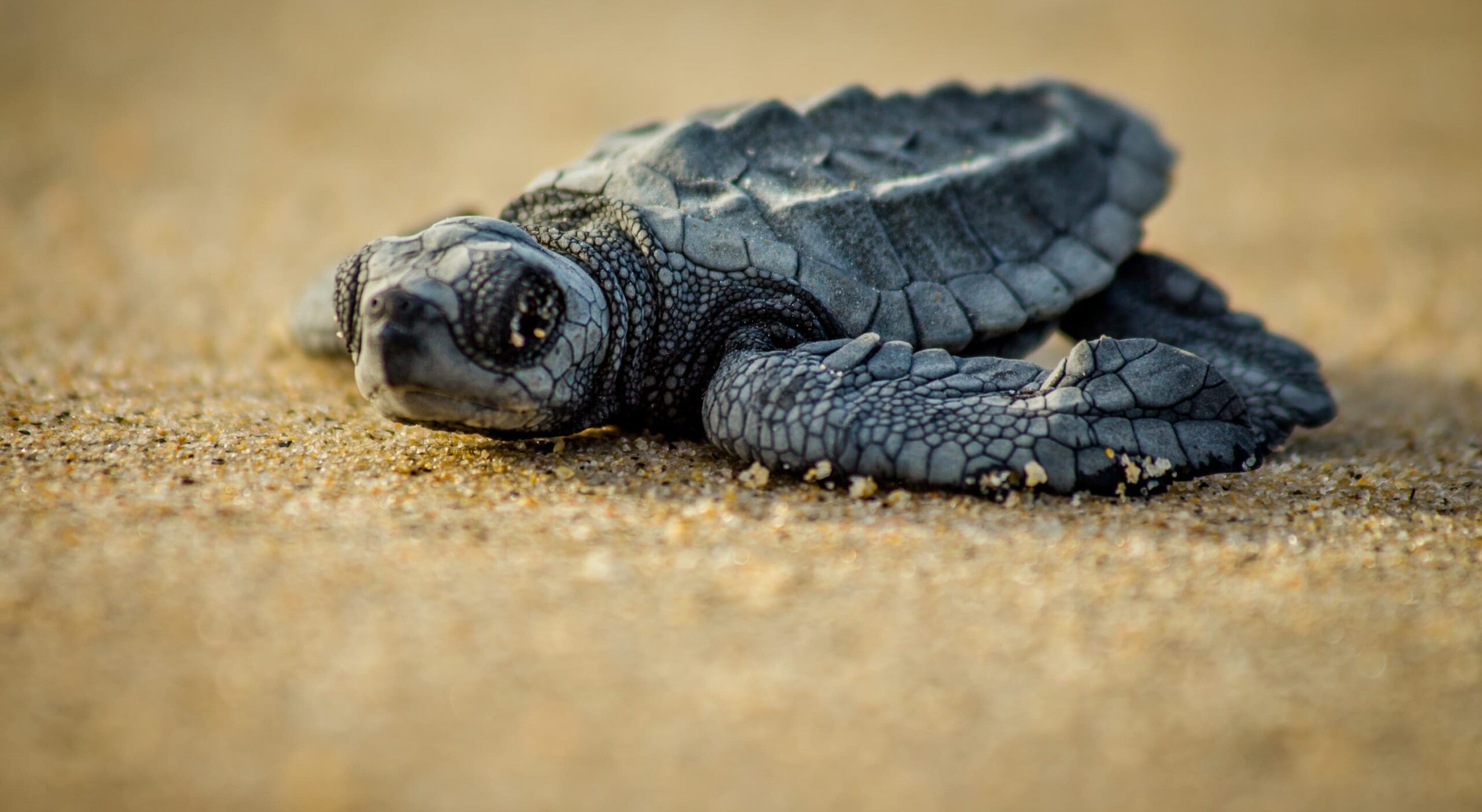
- Hatchlings emerge mostly at night or just before sunrise.
A single nesting turtle may spend several hours on land, digging her nest, laying eggs, covering them, and returning to the sea. Hatchlings, by contrast, appear suddenly and move quickly; their journey from nest to water can take just minutes, but it’s the most dangerous moment of their lives.
Sea Turtles vs. Gopher Tortoises: Know the Difference
Amelia Island is home to both sea turtles and gopher tortoises, and while they’re often confused, they are very different animals with different habitats and protections.
- Sea turtles nest on ocean beaches and live primarily in the water.
- Gopher tortoises live inland, dig burrows, and never enter the ocean.
Why mention this difference? Understanding it matters, especially when reporting sightings or potential disturbances. Amelia Island Sea Turtle Watch provides clear visual guides to help visitors quickly identify which species they’re seeing.
The Sea Turtle Species You May See
Five species of sea turtles are found in Florida waters, and they’re all protected under the Endangered Species Act. On Amelia Island, you’re most likely to encounter:
Loggerhead Sea Turtles
The most common nesters on Amelia Island. Large, strong-jawed, and often weighing around 250–300 pounds, loggerheads return to the same beaches where they were born to lay their eggs.
Green Sea Turtles
Less common but increasingly present. Greens are primarily herbivores and known for long migrations between feeding and nesting grounds.
Leatherback Sea Turtles
Rare but unforgettable. Leatherbacks are the largest sea turtles in the world, with soft, ridged shells and a diet heavy in jellyfish. Sightings are uncommon but possible.
Other species, such as hawksbill and Kemp’s ridley turtles, are far rarer in this region.
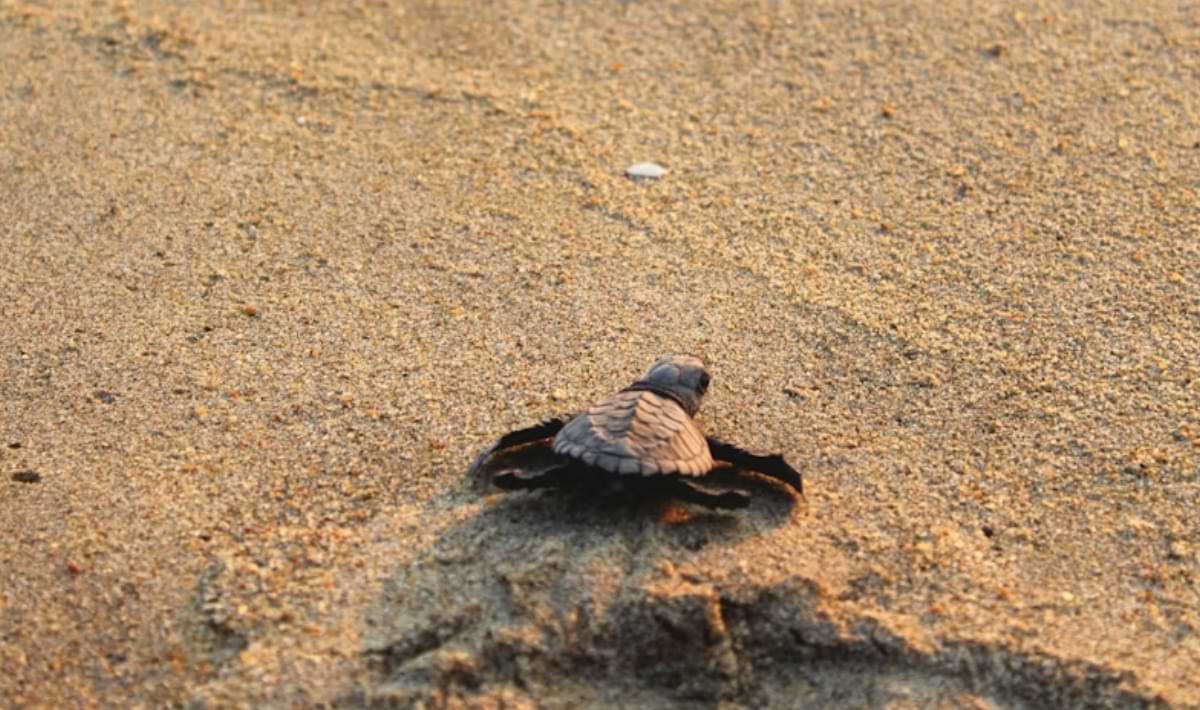
Where Turtle Nesting Happens on Amelia Island
Sea turtle nests can appear anywhere along Amelia Island’s beaches, from the northern stretches near Fort Clinch to the southern end of the island.
Here’s how you’ll know you’re in a nesting area:
- Low-profile wooden stakes.
- Mesh coverings or protective markers.
- Signage asking visitors to keep clear.
Heads up: These markers don’t mean “tourist attraction.” They’re protective boundaries designed to give turtles the space they need to survive.
How to See Turtle Activity Responsibly
Here’s the truth: seeing a nesting turtle or hatchlings is never guaranteed, and that’s part of what makes it special. There are no schedules, tickets, or performances. So, if you’re a wildlife enthusiast and want to see nature doing her thing, you have to be patient and, above all, respectful.
Best Times to Look
- Nesting turtles: Late night to very early morning.
- Hatchlings: Often just before sunrise or after dark.
What to Do If You See a Turtle
- Keep your distance.
- Stay quiet and still.
- Never touch, block, or surround the animal.
- Do not use flash photography or bright lights.
Even well-meaning actions can disrupt nesting or disorient hatchlings.
Why Lighting Matters More Than You Think
Artificial lighting is one of the biggest threats to sea turtle hatchlings.
Hatchlings instinctively move toward the brightest horizon, which historically meant moonlight reflecting off the ocean. Artificial lights from homes, streets, flashlights, and phones can confuse them, sending them inland instead, often toward dehydration, predators, or traffic.
That’s why Amelia Island enforces coastal lighting ordinances, and why visitors play such an important role.
Here’s what you can do to help:
- Turn off beachfront lights at night.
- Close curtains or blinds in oceanfront rentals.
- Avoid flashlights, phone lights, or camera flashes on the beach.
- Use turtle-safe, amber lighting if needed.
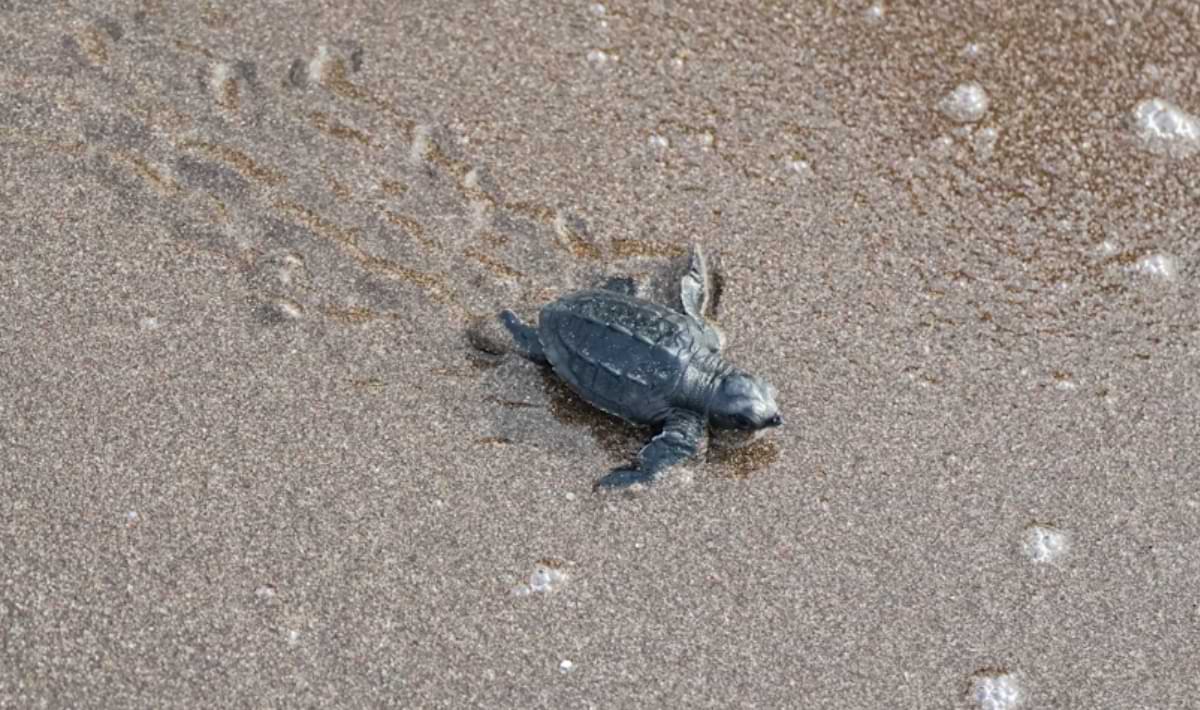
Simple Beach Habits That Protect Turtles
Sea turtles are powerful swimmers, but surprisingly vulnerable on land. Here are a few more tips on how you can help protect these captivating creatures:
Remove Beach Gear Each Evening
Leaving chairs, tents, umbrellas, or toys overnight creates obstacles that turtles cannot go around. Nesting turtles weigh up to 200 pounds and cannot maneuver around large objects.
Fill in Holes and Flatten Sandcastles
Holes dug during the day become traps at night. Hatchlings and adult turtles can fall in and become stuck. Taking a few minutes to smooth the sand before leaving makes a real difference.
Pack Out All Trash and Food
Leftover food attracts raccoons, foxes, and other predators that prey on turtle eggs. Clean beaches are safer beaches.
Attend a Nest Excavation (Educational and Permitted)
One of the most informative ways to learn about turtle conservation is by attending a nest excavation conducted by Amelia Island Sea Turtle Watch.
Three days after hatchlings emerge, trained volunteers carefully excavate the nest to inventory:
- Unhatched eggs.
- Empty shells.
- Hatchlings that didn’t survive.
- Occasionally, live hatchlings that emerge late.
If live hatchlings are found, they are released immediately. Everything else is returned to the nest site to leave the area as natural as possible.
If you’re interested in attending an excavation, they typically begin in early to mid-July and continue through the end of the nesting season. While sightings are never guaranteed, the educational value is significant. You can check the excavation schedule here.
Why Sea Turtles Are Endangered
Sea turtles face threats at every life stage, many of them human-related. Here are some of the factors that threaten them:
- Coastal development.
- Artificial lighting.
- Pollution and plastic ingestion.
- Fishing gear entanglement.
- Loss of nesting habitat.
Because turtles return to the beaches where they were born, protecting Amelia Island’s shoreline directly affects future generations of turtles.
While you’re here, if you ever encounter a sick, injured, trapped, or disoriented turtle, here’s what you should do:
- Do not intervene directly.
- Keep people at a distance.
- Report immediately to Florida wildlife authorities.
Florida Fish and Wildlife Conservation Commission
📞 1-888-404-3922
FAQ: Visiting Amelia Island During Turtle Season
1. Is turtle season a good time to visit Amelia Island overall?
Yes. Turtle season overlaps with some of Amelia Island’s best beach weather, especially in late spring and early fall. The island feels lively yet balanced, with nature experiences adding depth without limiting access to beaches or amenities.
2. Are beaches closed during turtle nesting season?
No. Beaches remain open and fully accessible. Nesting areas are clearly marked and protected, but visitors can still enjoy walking, swimming, and relaxing as long as posted guidelines are respected.
3. Are dogs allowed on the beach during turtle season?
Yes, but local leash laws apply, and extra awareness is important at night and early morning. Dogs should be kept well away from marked nests and never allowed to dig near protected areas.
4. What time of year offers the best chance of seeing hatchlings?
Late July through September typically offers the highest chance of hatchling emergence, though timing varies by nest. Even then, sightings are unpredictable and should never be sought out aggressively.
5. Can I take photos or videos if I see turtles?
Photography without flash is generally acceptable only if it does not involve approaching, lighting, or altering the turtle’s behavior. Flash, phone lights, and video lighting are not allowed and can be harmful.
6. What happens if a nest is disturbed accidentally?
Accidental disturbances should be reported immediately to local wildlife authorities. Never attempt to fix, move, or uncover a nest yourself, even with good intentions.
7. How can visitors leave a positive impact beyond following beach rules?
Supporting local conservation organizations, attending educational programs, sharing turtle-safe practices with others, and modeling respectful behavior all contribute to long-term protection efforts.
Make Your Trip to Amelia Island Even Better
Specializing in boutique-style service, Stay Better Vacations offers thoughtfully curated vacation rentals across Amelia Island, Florida, and St. Marys, Georgia. As a locally owned, women-operated company, we focus on warm Southern hospitality and stays that feel personal, relaxed, and easy. Get ready for beach days, coastal adventures, and time well spent with family or friends. Traveling with a pup? Select pet-friendly vacation rentals make it simple to include every member of the crew.